
Hotel and tourism branding in Mallorca: a practical guide to design that gets bookings
A practical guide to branding and web design for hotels and tourism brands in Mallorca: multilingual sites, seasonality, photos, direct booking and social.
By Alexander Cillán · · 5 min read
On this page· 8
Mallorca lives on tourism, and every hotel, villa, beach club and tour operator on the island competes for the same guests, often on the same booking platforms. Design is one of the few things that clearly sets you apart: it decides whether people remember you, trust you and book with you directly.
I’m a designer based in Palma. Hospitality was an important part of my early career: I worked as a graphic designer at Cursach Hotels, later also as community manager, and freelance as a video editor and graphic designer for Hotelbeds. Today I mostly design brands, websites and products for US startups, but the island’s hotels and tourism brands are still close to home. This is the practical guide I’d give any of them.
One brand system across every property
Many hotels in Mallorca belong to groups with several properties, sometimes very different from each other: a family resort, an adults-only hotel, a boutique place in the old town. The common mistake is letting each one drift into its own look.
Decide on the structure first:
- One master brand with each hotel as a variation, when guests should feel the group behind every stay.
- Endorsed brands, where each hotel has its own name and personality but carries a clear “by” line from the group.
- Independent brands, when the properties target audiences that shouldn’t be mixed.
Whatever you choose, share the system underneath: typography, a color logic, photo style, tone of voice and templates. Each property gets its own accent, not its own rules. That’s what keeps a group consistent across websites, signage, menus, social media and print. If you’re planning a new identity, here’s what drives the cost of a brand identity.
A multilingual site done properly
Guests come to Mallorca from all over Europe and beyond, so most hotel websites need at least English, German and Spanish, and often more. A language switcher is not enough on its own:
- Real translations, reviewed by native speakers, not raw machine output. Tone matters as much as grammar.
- Separate URLs per language with proper hreflang tags, so search engines show the right version in each country.
- The whole journey in one language, including the booking engine, confirmation emails and the cancellation policy.
- Local details: date formats, currencies and phone numbers that feel familiar to each market.
- Translated image alt texts and meta descriptions, which also help local search.
Design for seasonality
Mallorca has a strong high season and a quieter rest of the year, and a hotel website should reflect that instead of showing the same summer page all year.
- A modular homepage where the hero, offers and featured experiences can change with the season without a redesign.
- Clear opening dates. If you close in winter, say so, and let people book next season early.
- Off-season stories. If you stay open, show what the island offers outside summer: cycling, hiking, gastronomy, quiet beaches.
- A content calendar planned months ahead, because guests book well before they travel.
Photography sells the stay
For a hotel, photos do most of the selling. A few principles:
- Real and honest. Show the actual rooms, views and spaces. Guests compare photos with reality, and disappointment ends up in reviews.
- One consistent look. Same light, color grade and framing across every property, so the group feels like one brand.
- People and moments, not only empty rooms: breakfast on the terrace, the pool in the late afternoon, the walk to the beach.
- A shot list per season, so the site and social channels can follow the year.
- Fast loading. Large images in modern formats, properly sized, so the beauty doesn’t cost you bookings on mobile.
Many of the same ideas apply to luxury properties in particular; I go deeper in my principles for luxury website design.
Make booking direct the easiest option
Every booking through an online travel agency comes with a commission, so direct bookings matter. Guests will book direct when it feels as easy and safe as the platforms they know.
- A booking bar on every page, with dates and guests first, and visible on mobile without scrolling.
- The full price up front, including taxes, with no surprises at the last step.
- Clear reasons to book direct: best price, flexible cancellation, a welcome drink, early check-in, whatever you can actually offer.
- Few steps. Every extra form field loses people.
- A booking engine that looks like your brand, not a jump to a different-looking site.
- Trust signals near the button: reviews, secure payment and the cancellation policy in plain language.
Social content that matches the brand
For many guests, Instagram or TikTok is where they first see your hotel. Social content should feel like the same brand as your website, not a separate world.
- Templates for stories, offers and announcements, so anyone on the team can post without breaking the look.
- Short video of real moments: the room at sunrise, the pool, the kitchen at work. Timing and rhythm matter more than effects.
- Guest content, reposted with permission, as social proof.
- A clear path to booking from every profile and every post.
- Community management that answers questions quickly and in the guest’s language. Replies are part of the brand too.
A quick checklist
- One brand system shared across all properties.
- A full website in every language your guests speak, including booking.
- A homepage that changes with the season.
- Real, consistent and fast-loading photography.
- A visible booking bar, full prices and clear reasons to book direct.
- Social templates and short video that match the brand.
If you run a hotel or tourism brand in Mallorca and want to talk about your brand or website, here’s how I work from Palma.
Frequently asked questions
What should a hotel website include?
Real photos of rooms and spaces, clear room types and prices, a booking bar on every page, location and how to get there, reviews, the cancellation policy, contact details and a version in every language your guests speak.
How can a hotel get more direct bookings?
Make booking on your own site as easy and safe as on the big platforms: a fast mobile site, full prices up front, few steps, trust signals near the button and clear benefits for booking direct.
Which languages should a hotel website in Mallorca have?
At least English, German and Spanish, plus the languages of your main markets. Translate the whole journey, including the booking engine and emails, and use separate URLs with hreflang tags.
Should hotels in the same group share one brand?
It depends on the audiences. A shared master brand works when guests should feel the group behind every stay; separate or endorsed brands work when properties target very different guests. In every case, share one system underneath.
Keep reading
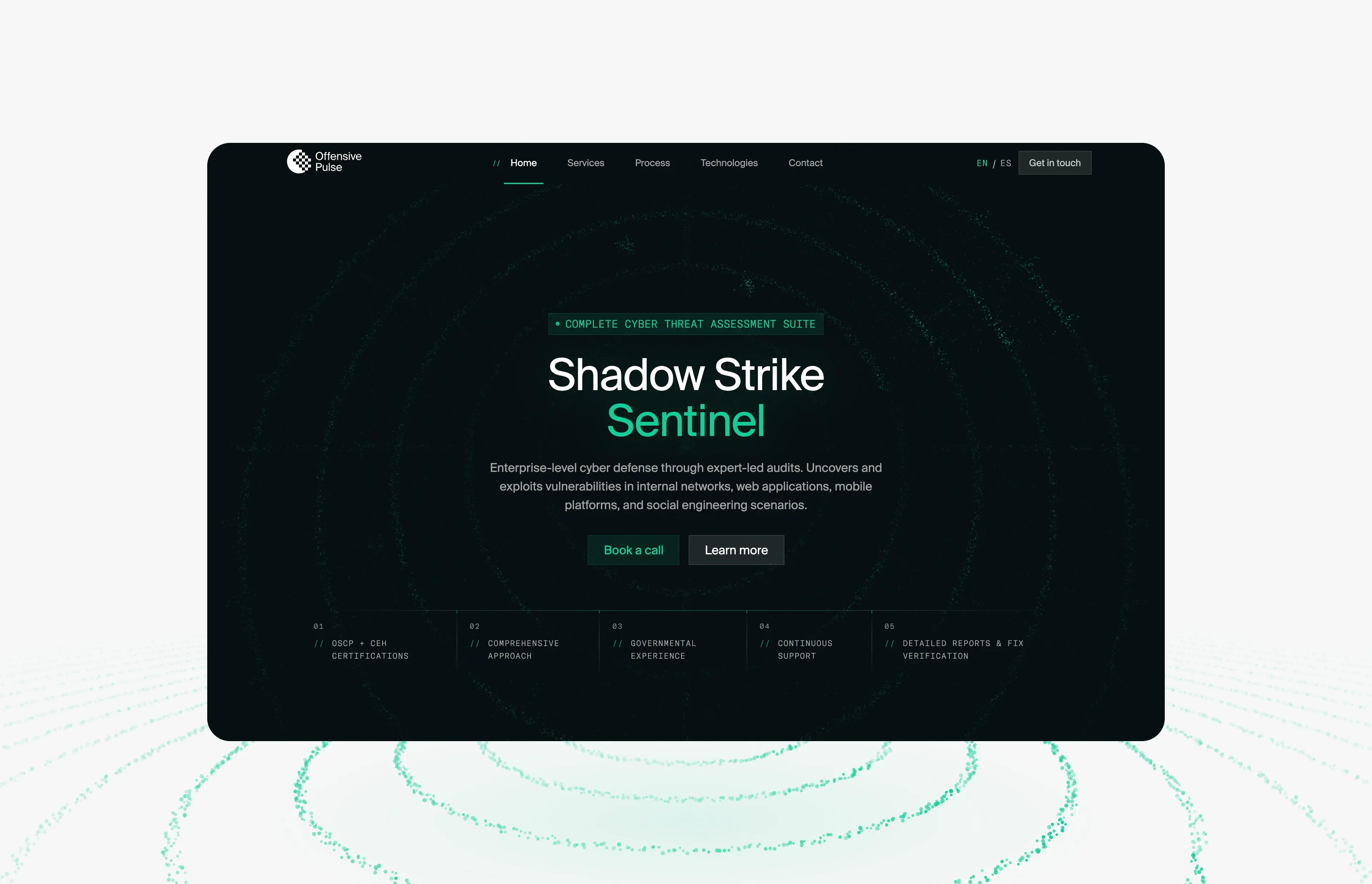
Article · October 30, 2026 · 4 min read
Offensive Pulse: a futuristic cybersecurity website built from one particle field
How offensivepulse.com looks futuristic without hacker clichés: one WebGL particle field that changes shape per section, decoding text and one signal green.
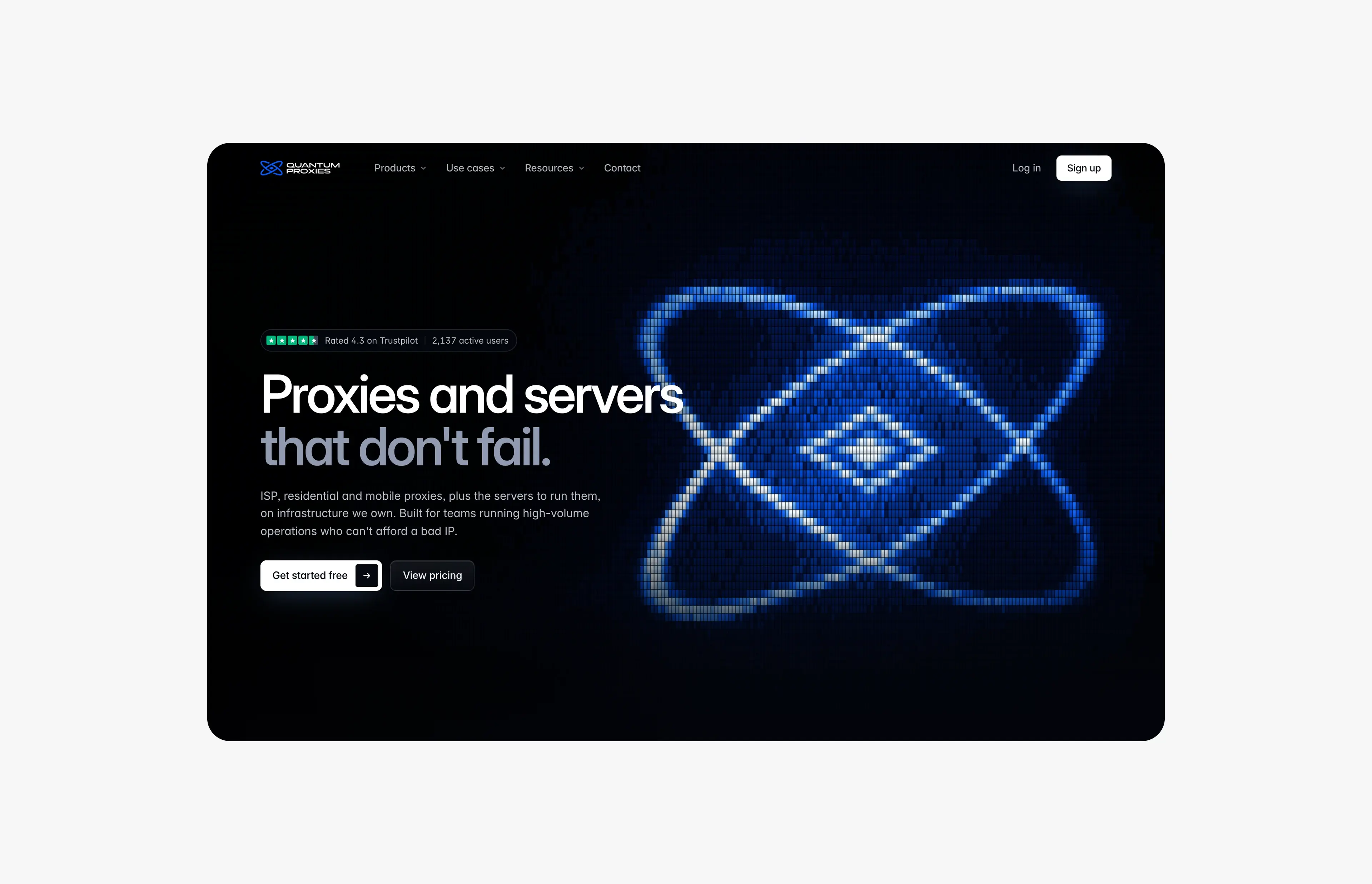
Article · October 28, 2026 · 4 min read
Designing Quantum Proxies: LED light, glass and one camera
The design of quantumproxies.net: an LED hero that lights up under your cursor, glass panels, 3D renders that read as one family and a map you can explore.