
A designer in Spain for US startups: working across time zones
A brand, product and web designer in Spain who works mostly with US startups: how the time difference helps, my process, timelines and what to prepare.
By Alexander Cillán · · 3 min read · Updated October 19, 2026
On this page· 7
I’m Alexander Cillán, a designer and creative director based in Palma de Mallorca, Spain. I’m half Spanish, half Danish, born in Tenerife, and I’ve been designing since I was 17 and working independently since 2018. Since 2021 I’ve delivered more than 2,000 projects for over 200 founders, and today I run my own design agency with a five-person crew.
Most of my clients are startups in the US. If you’re a founder there looking for a brand, product or web designer, here’s how working with someone in Spain actually goes: the time difference, the process, and what to prepare before we talk.
What I design
- Brand identity: logos, color, typography, guidelines and the assets you use every day.
- Product design: UI/UX for web apps, SaaS and mobile apps, including design systems.
- Websites: landing pages and full sites, designed and built to be fast.
- Motion and 3D: logo animations, product renders and launch videos.
- Pitch decks, packaging and merch.
You can see recent work in the case studies, like a 100+ screen redesign for an AI platform or branding and a website for a luxury watch dealer.
Who I work with
Mostly US startups and tech teams, in crypto, SaaS, gaming, fintech, AI and consumer tech, plus a few teams in Europe. Recent US projects include an e-commerce redesign for a New York butcher shop, the brand and app for an AI fitness startup and a 3D logo animation for an event discovery app.
How the time difference works
Spain is on Central European Time: six hours ahead of New York and nine ahead of Los Angeles (for a few weeks in spring and autumn, when the clocks change on different dates, it’s one hour less).
- Your morning is my afternoon. That’s when calls happen, so we can talk on the same day without anyone working late.
- Work moves while you sleep. Feedback you send in the afternoon is picked up first thing in my morning, so there’s progress waiting when your day starts.
- Everything is written down. Daily updates, decisions and files live in one thread, so nobody depends on a meeting to know where things stand.
How a project works
Four steps, with no guesswork:
- Kick-off. We align on goals, scope and timeline, and I send a clear quote so everyone knows exactly what’s included.
- Project start. Once the invoice is paid, we start straight away to keep momentum.
- Daily check-ins. You get a short progress update or visual every day, so feedback is quick and nothing drifts.
- Ship and refine. You receive launch-ready files, with time for a final check or tweak before we wrap.
Email replies come within 24 hours, and on Telegram, WhatsApp or Discord I usually answer in minutes during office hours.
Choosing a remote designer: what to look for
Whether your designer is down the street or across the Atlantic, check:
- Relevant work. Projects close to yours in industry or type.
- A clear process. You should know what happens each week and when you’ll see things.
- Communication. Fast, clear replies during the project matter as much as talent, and more so across time zones.
- Ownership. Source files and full usage rights for what you pay for.
- References. Read what past clients say, or ask to speak to one.
What to prepare before we talk
- What you’re building and who it’s for.
- What you need: identity, product, website, motion, or a mix.
- Three brands or products you admire, and why.
- Your deadline or launch date.
- A rough budget, so I can suggest the right scope.
To plan your budget, read what drives the cost of a brand identity.
Frequently asked questions
Do you work with US companies?
Yes, most of my clients are startups and tech teams in the US. Everything runs remotely, with daily updates and calls in your morning.
Which time zone are you in?
Central European Time (Spain): six hours ahead of New York and nine ahead of Los Angeles.
Which languages do you work in?
English and Spanish.
Can you also build the website?
Yes. Besides design, I build fast websites and web apps, so design and development can happen in one place.
How quickly can we start?
It depends on the current schedule. Send a message with your project and deadline, and I’ll reply within 24 hours with availability.
Keep reading
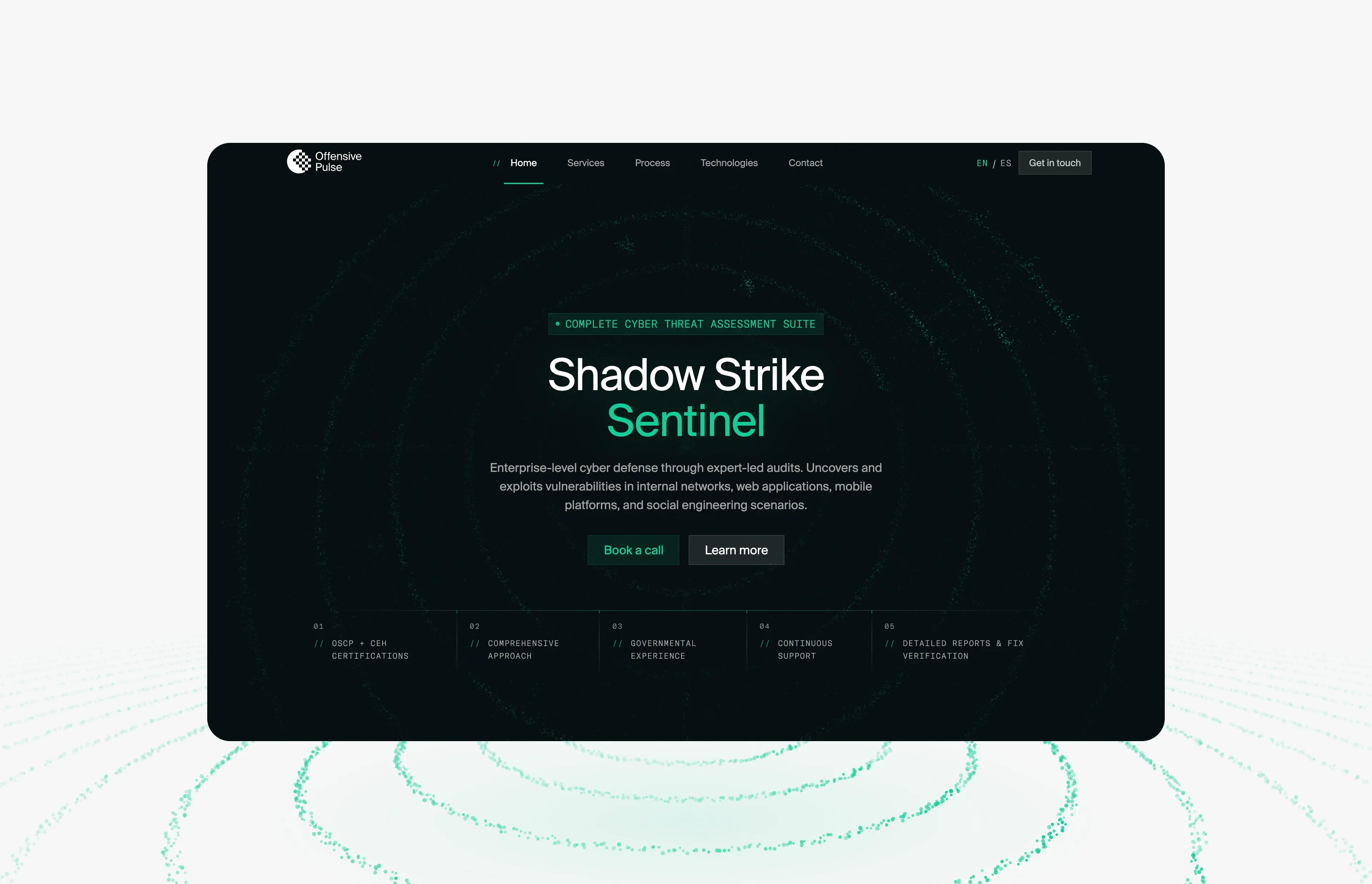
Article · October 30, 2026 · 4 min read
Offensive Pulse: a futuristic cybersecurity website built from one particle field
How offensivepulse.com looks futuristic without hacker clichés: one WebGL particle field that changes shape per section, decoding text and one signal green.
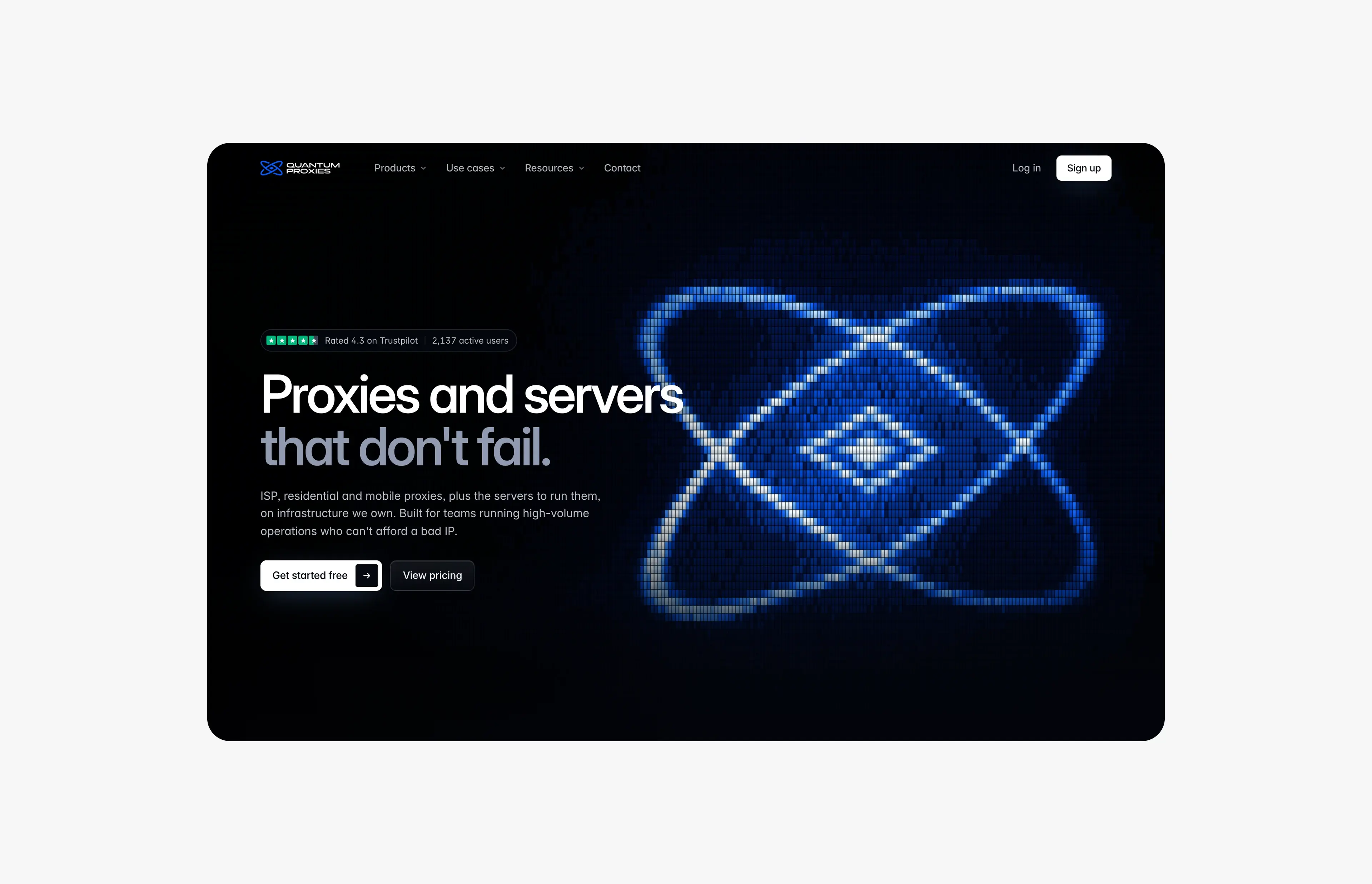
Article · October 28, 2026 · 4 min read
Designing Quantum Proxies: LED light, glass and one camera
The design of quantumproxies.net: an LED hero that lights up under your cursor, glass panels, 3D renders that read as one family and a map you can explore.